


Cart 0
The late and well-respected archaeologist William F Albright made many contributions to our knowledge of history, but not all of them were discoveries he himself dug out of the ground. Such is the case with an artifact that sheds light on the day-to-day beauty practices of ancient women.
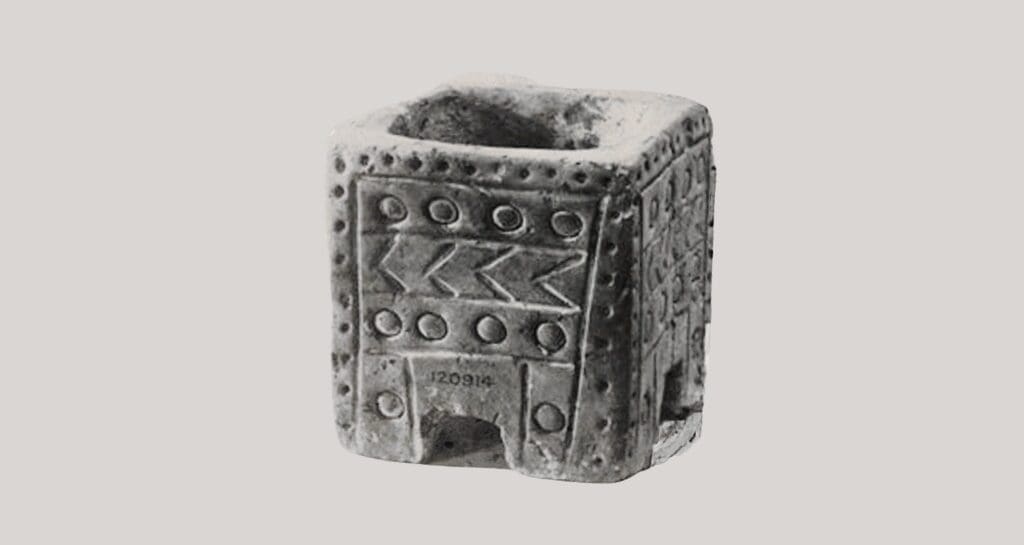
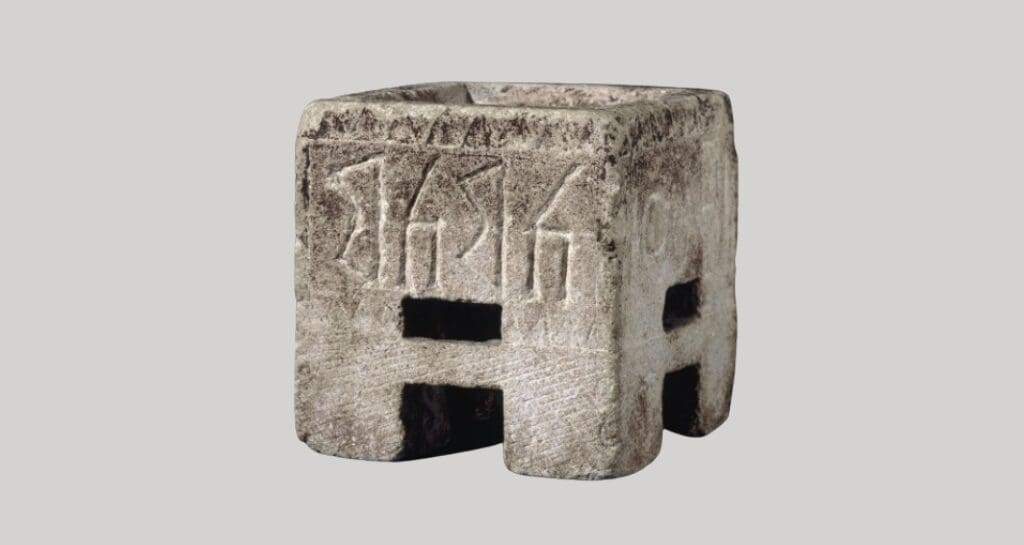
Albright began this discovery by reexamining a small box that was found in the Israeli city of Lachish in the 1930’s. This cube-shaped box was thought to belong to a classification of ritual incense burners; incense burners that had use in religious ceremonies or services.
The box that drew Albright’s attention had an inscription around its sides that had been hastily translated as something to do with incense and the proper name of the Biblical God, so its connection to religion was assumed verified. Albright’s reexamination however, claimed an entirely different translation, in his reading the box read, “Belonging to the daughter of Iyyos, son of Mahli the [royal] courier.”(See Numbers 26:58, Levitical Mahlite Clan)
“Myrrh, aloes, and cassia perfume all your garments”
Psalm 45:8
Supported by other well-respected scholars, this new translation changed the artifact from one with religious significance to one with a different kind of Biblical link. This was now a cosmetic burner, meaning a box that fumigated ancient perfume into the pores and clothes of Judean women.
Other known cosmetic burners follow generally the same build; they are cubes with 4 legs and a shallow bowl in the top to hold spices. Many found burners have names of spices inscribed on their sides.
As to use, Albright cites a 19th century book (The Nile Tributaries of Abyssinia by Sir S. W. Baker, London 1868) in which the travelling author describes how Bedouin women tented themselves over a coal fire with spices thrown in, using their outer garments to keep in all the fumes. In this way he claims that he could smell a group of women from a hundred yards away.
While this observation was made thousands of years after this personal cosmetic burner was made, it at least provides a link from a comparable culture as to how the boxes may have been used. And it absolutely illuminates Biblical passages like Psalm 45:8 “Myrrh, aloes, and cassia perfume all your garments” Various passages from Song of Solomon, and of course Queen Esther’s yearlong beauty treatment that is said to have included 6 months with perfumes and cosmetics (Esther 2:12).

Corie Bobechko is a daily co-host, speaker, and writer of Bible Discovery. She also hosts a YouTube channel that shows how history and archaeology prove the Bible. Her heart for seekers and skeptics has led her to seek truth and share it with others. Corie also has a Bachelor of Theology from Canada Christian College.