


Cart 0
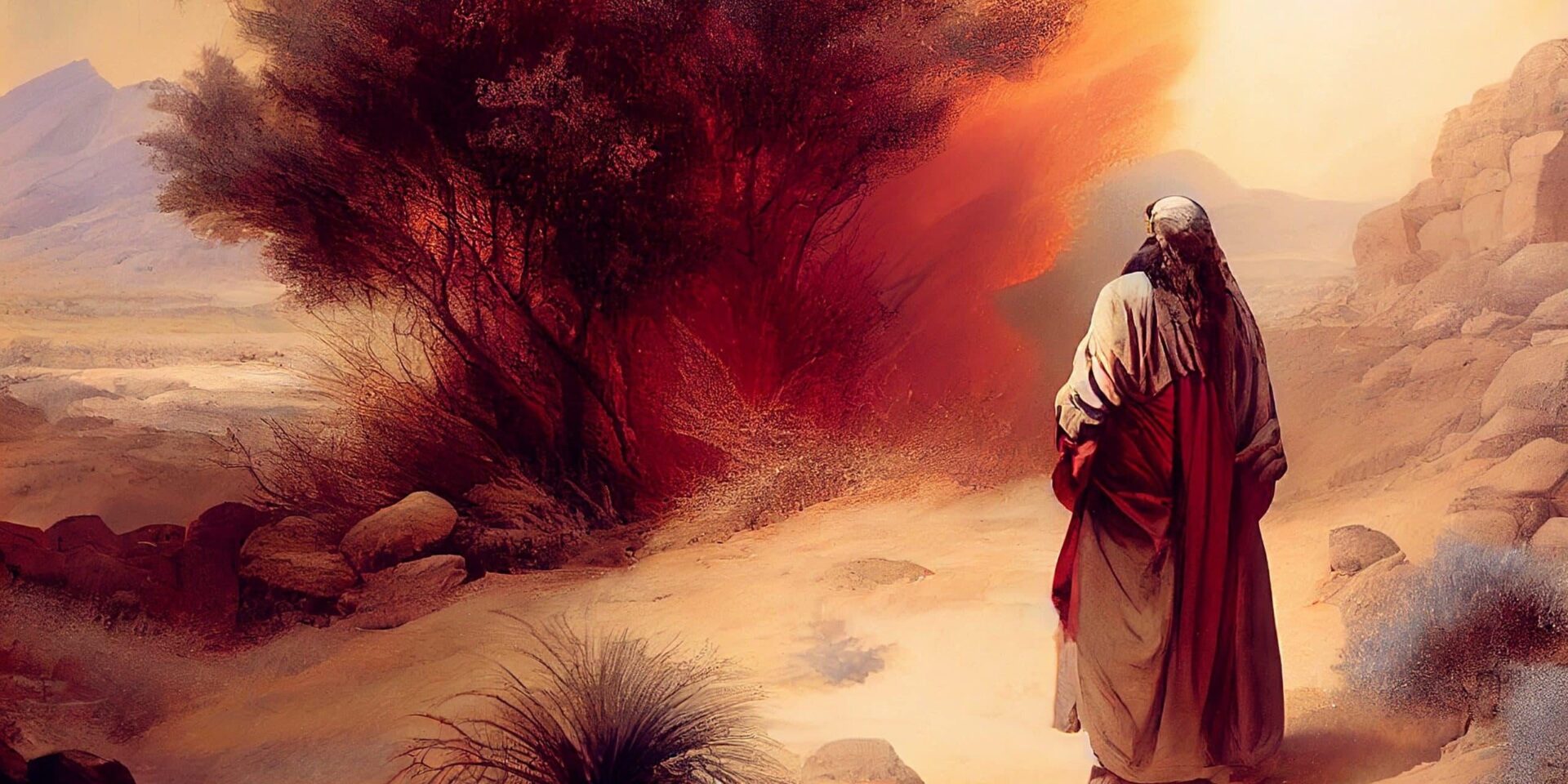
When the Angel of the Lord called Moses through the burning bush to deliver His people Israel from slavery, Moses asked Him a point blank question, “If I come to the people of Israel and say to them, ‘The God of your fathers has sent me to you,’ and they ask me, ‘What is his name?’ what shall I say to them?” (v.2,13) Moses recognized the Angel of the Lord for who He was––God Almighty. Then, He said to Moses that His name is “I Am That I Am” and directed him to say to Israel when they ask who sent him: “I Am has sent me to you” (Exodus 3:14). Simply “I Am” was sufficient.
From then on, the name “I Am” has been deemed divine ever since. Even the name itself, the order and way in which the words are formed, implies a self-existent and self-defining identity, the Supreme Being and Ultimate Deity over time, space, matter, and meaning. He is the essence of identity itself, the source of all being, completely incomprehensible, yet perceptible and intuitive to our fallen nature. As Paul said when he quoted the Cretan philosopher Epimenides, for “In him we live and move and have our being,” (Acts 17:28) and yet “His invisible attributes, namely, His eternal power and divine nature, have been clearly perceived, ever since the creation of the world, in the things that have been made.” (Romans 1:20). As Anselm, archbishop of Canterbury, also deduced when formulating his now famous ontological argument for God’s existence, that God is “that than which nothing greater can be conceived” . In other words, God is the highest conceivable Being: He is simple and discernible, yet well beyond human comprehension, that is, our capacity to fully experience, reason, and understand Him ––His thoughts and ways are higher and holier than ours (Isaiah 55:6-9). The name “I Am” implies all of this––a mysterious yet magisterial divine essence of Being––conveying that God is not contingent on anyone or anything else for His existence or identity or character, or even to know Himself. He simply is—eternal, uncreated, self-sufficient, transcendent, yet personal, relational, and immanent. He is true Being, and we are but becoming. All this in in only two Hebrew words, spoken in three: hāyâ ăšer hāyâ.
The Angel of the Lord in the burning bush was the preincarnate Christ, known in theology as a Christophany, an embodied appearance of the Son of God, eternally begotten of the Father before all ages. It is no surprise, then, that Jesus also uses God’s name “I Am” to identify Himself as God when He was in the Temple, restating to those sitting on the seat of Moses what He said to Moses face-to-face (Matthew 23:2; Exodus 33:11).
“Truly, truly, I say to you, before Abraham was, I Am.” (John 8:58)
Now, rather than say “before Moses”, Jesus said “before Abraham”, the first patriarch, meaning from before the Law, before circumcision, before the first covenant, before the promise of God, before Israel. Jesus outspokenly declared “I Am God”. To a first century Jew, it couldn’t be more obvious, which is why the Jews tried to stone Him for blasphemy (v.59) –– pretty frequently, actually (John 5:18, 10:31-33,39).
He, then, goes on to declare “I Am” God seven more times. John records this for us:
“I am the bread of life” (John 6:35,41,48,51)
“I am the light of the world” (John 8:12; 9:5)
“I am the door” (John 10:7-9)
“I am the good shepherd” (John 10:11)
“I am the resurrection and the life” (John 11:25)
“I am the vine” (John 15:1,5).
“I am the way, and the truth, and the life” (John 14:6)
Just take a moment to consider what Jesus is really saying, here. To call yourself “resurrection” and “life” and “truth” is not a whimsical thing to say, even for a prophet. I’m being cheeky, here, but the point is that if Jesus was not truly declaring Himself God, but was simply taking the name “I Am” for Himself as though He ought to be God, then He would be the most narcissistic, blasphemous man in history. The Jews would be right. All seven “I Am” statements are blasphemous declarations, if Jesus is not God. Unlike Moses who received the Law and pointed to God, Jesus is not pointing to a Law external of Himself, He is pointing to Himself as the Law. He is directing all the attributes of worship and divine power toward Himself. This would be the highest degree of blasphemy if Jesus was merely a prophet or a good moral teacher.
So––if you believe Jesus was only a prophet or a good moral teacher, and you call yourself a Christian, that is a follower of Christ, then you follow a blasphemer.
You blaspheme God.
We see this self-defining attribute of God again in John’s vision of the end, when the Word of God, Jesus Christ, descends upon the world on a warhorse with “a name written that no one knows but himself” (Revelation 19:12).
I Am That I Am.
No one defines Christ but Himself.

Matlock Bobechko is the Chief Operating/Creative Officer of Bible Discovery. He is an eclectic Christian thinker and writer, award-winning screenwriter and short filmmaker. He writes a blog on theology, apologetics, and philosophy called Meet Me at the Oak. He is also an Elder at his local church.