


Cart 0

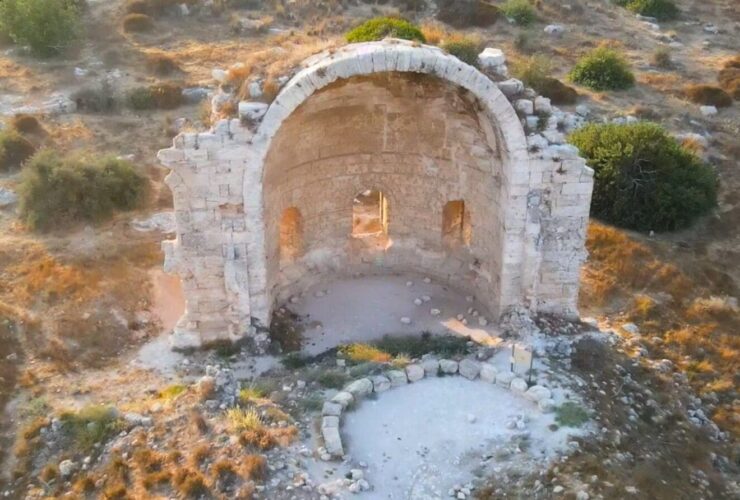
Although King Solomon had a God-given wisdom that was unmatched by anyone (1 Kings 4:30-31), he was not the only wiseman of the ancient east. In fact, Babylon, Egypt, and Edom (among others) were all known for their wise sages. Edom was founded by Jacob’s brother Esau and seems to be where the events of Job took place. Even Job’s friend Eliphaz (who thought himself wise) apparently hailed from Teman which was “an important city in Edom, southeast of the Dead Sea, near the later city of Petra.” , Also, Solomon and the Jews were not the only ones who produced wisdom literature. As a matter of fact, we have examples from both Babylon and Egypt that are quite similar to the Biblical Proverbs.
As Bible commentator Sid Buzzell points out, in Babylon and Egypt’s wisdom literature “several works are collections of proverbs or include at least some proverbial sayings….Samples of Babylonian wisdom literature that includes proverbs are Counsels of Wisdom (ca. 1500-1000 B.C.), Akkadian Proverbs (ca. 1800-1600 B.C.); and The Words of Ahiqar (700-400 B.C.)….Examples from Egypt are The Instruction of the Vizier Ptah-Hotep (ca. 2450 B.C.), with advice on how to be a successful state official; The Instruction of Amen-em-Het (ca. 2000 B.C.), a father’s words to his son about how people he had favored disappointed him; The Instruction of Amen-em-Ope (ca. 1300-900 B.C.), a king’s teachings to his son about life, using some words similar to those in Proverbs (e.g., “Listen, my son,” “path of life,” “the way”). The fact that some sayings in The Instruction of Amen-em-Ope parallel parts of Proverbs (e.g., Prov. 22:17-24:22) has raised the question of whether Proverbs borrowed from this Egyptian writing, or the Egyptian writer borrowed from Proverbs, or whether both wrote independently about common concerns.”
Writing about this issue, Bible scholar David L. Adams explains that while it is true that “many of the ideas and themes in the book of Proverbs also appear in other, especially Egyptian, wisdom writings. This should not be understood to mean that Israel’s sages borrowed such ideas wholesale from the didactic literature of the surrounding cultures;


rather, a common approach to observing the order of the cosmos led biblical and nonbiblical wisdom writers to many of the same conclusions.” Furthermore, says Sid Buzzell, “The fact that some maxims in the Book of Proverbs are similar to these Egyptian and Mesopotamian writings does not undo the divine inspiration of the Scriptures. God guided the writers of the Book of Proverbs so that their writings, inspired by the Holy Spirit, recorded exactly what God wanted included in the biblical canon.”
Also, while the similarities between the biblical book of Proverbs and the secular wisdom literature are notable, the differences between them are even more significant. For example, while both the Biblical and nonbiblical writings give instruction on how to have proper relationships with fellow man, the nonbiblical literature is more secular than the Proverbs of Solomon and sometimes even fall short morally. Also, these secular works are all missing the key ingredient of the biblical book of Proverbs which is the importance of fearing the Lord. According to Proverbs, “A person can lead a godly, wise life only as he fears and trusts the Lord.”
Thus, the Book of Proverbs stands alone as it teaches mankind how to first be rightly related to God, and then rightly related to others. It’s righteousness and justice. Thus, not only are the Proverbs of Solomon unique among all other wisdom literature, but the book also ultimately teaches us how to live out the two greatest commandments in the entire Bible. First, to “love the Lord your God with all your heart, with all your soul, and with all your mind.” And second, to “love your neighbor as yourself.” These two commands, says Jesus, epitomise the entire Law (Matt 22:37-40). Truly the Book of Proverbs holds a distinction far above the other secular works!

Ryan Hembree is a daily co-host, speaker, and writer of Bible Discovery. He also hosts a YouTube channel that shows the unity of the Bible and how science and Scripture fit together. Ryan also has an honorary Masters of Ministry in Creation Science from Phoenix University of Theology.
[1] Job was from the land of Uz (Job 1:1) which, as other Bible passages imply, was around Edom.
[2] David L. Adams, ESV Archaeology Study Bible, Note on Job 2:11, P.712-713.
[3] While “Many commentators take the reference to Eliphaz the Temanite to suggest that he comes from Teman…. A few take the term to refer to the city of Taima in what is now northern Saudia Arabia. Either location falls within the general area associated with Uz.” David L. Adams, ESV Archaeology Study Bible, Note on Job 2:11, P.712-713.
[4] Sid S. Buzzell, The Bible Knowledge Commentary, Old Testament, Proverbs, P.904,906, John F. Walvoord and Roy B. Zuck general editors.
[5] David L. Adams, ESV Archaeology Study Bible, Introduction to Proverbs, P.887.
[6] Sid S. Buzzell, The Bible Knowledge Commentary, Old Testament, Proverbs, P.906, John F. Walvoord and Roy B. Zuck general editors.
[7] Ibid., P.906
[8] Ibid., P.904.