


Cart 0
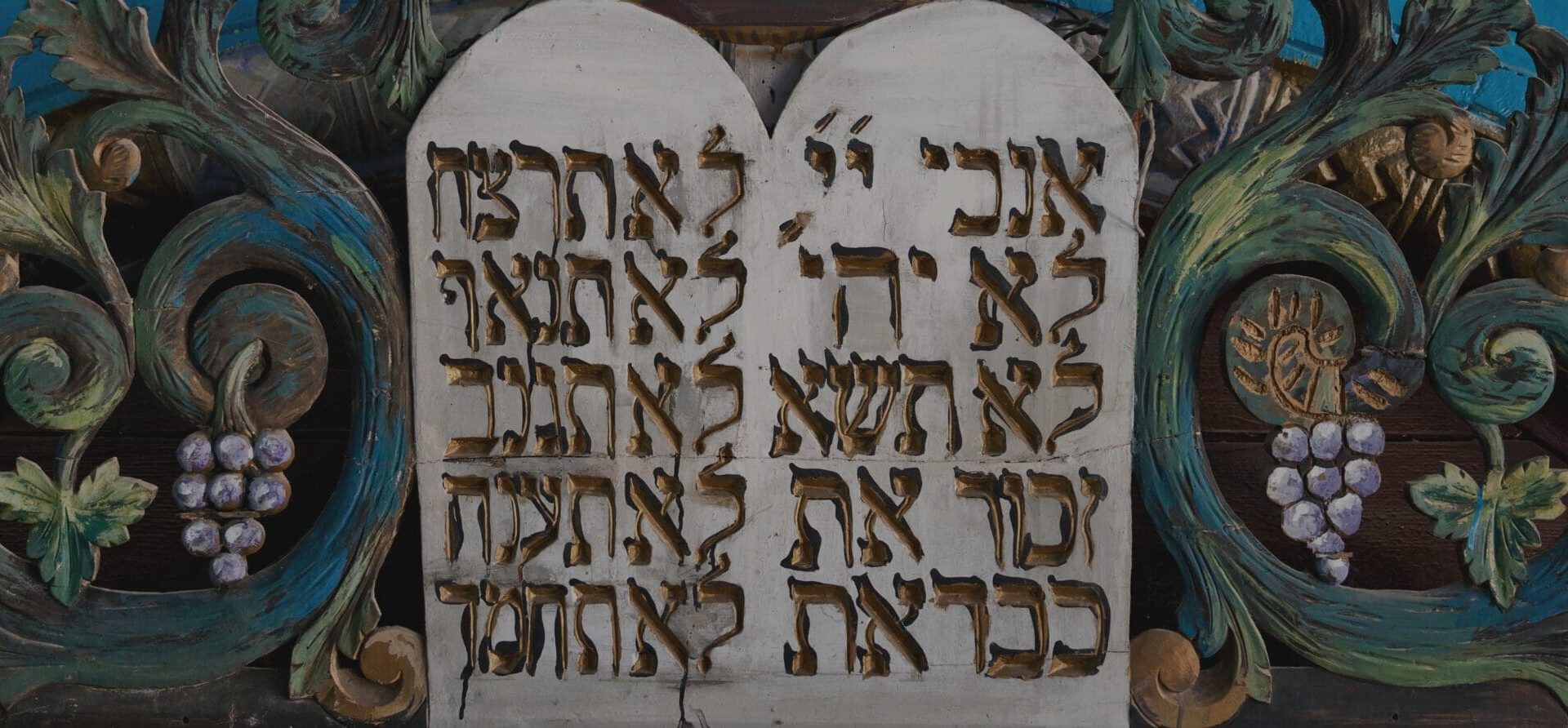
Of all 613 laws prescribed in the Old Covenant, which one is most important? Many Christians today will tell you that the Ten Commandments are the most important. But when Christ was asked this question, He did not mention them directly––He implied them. Instead, He referenced two passages: the Shema Yisrael and a single passage from the priestly law, and said that “On these two commandments depend all the Law and the Prophets.” (Matthew 22:40)
When Christ said, “And you shall love the Lord your God with all your heart and with all your soul and with all your mind and with all your strength” (Mark 12:30) He drew directly from Deuteronomy 6:5-9 , and when He said that the second is like it: “You shall love your neighbor as yourself” (Mark 12:31), He quoted Leviticus 19:18. Leviticus 19 recapitulates and deepens the expectations of the Ten Commandments. According to Christ, “There is no other commandment greater than these” (Mark 12:31b), and when He was asked how a person could inherit eternal life, He recites these two commands (Luke 10:25-28). In other words, you cannot even keep the Ten Commandments unless you keep these two first––that is, you keep the ten through the two (James 2:8-13; Galatians 5:14).
Now, it is well known that if you break one law, you break the whole law (James 2:10; Romans 2:25-29). In Matthew 19:16-22, when the rich young ruler asked Christ, “Teacher, what good deed must I do to have eternal life?” (v.16) Christ, then, reiterates the Ten Commandments with Leviticus 19:18 tacked on the end: “You shall not murder, You shall not commit adultery, You shall not steal, You shall not bear false witness, Honor your father and mother, and, You shall love your neighbor as yourself.” (Matthew 22:18-19) Because if you break these Ten Commandments, you are not loving your neighbour as yourself––you break the whole law. But! A person can, technically, keep the Ten Commandments, given its limited scope to a societal context, and by virtue of the fact that the commands are, more or less, passive in application: “You shall not”; as the rich young ruler said, “Teacher, all these I have kept from my youth.” Whereas the command to love, both God and neighbour, is proactive: “you shall”. It is something you do, not something you don’t do. Christ then, discerning his heart, challenged him to love God with all his strength by giving his wealth to the destitute, meaning, his neighbour (v.21). Why?
What I find most intriguing about the greatest commandments is that despite the logical order of loving God first and foremost, and then loving neighbour second, the two laws are actually inseparable––you cannot have one and not the other.
“For the whole law is fulfilled in one word: “You shall love your neighbor as yourself.” (Galatians 5:14)
In fact, it is improper to teach that you love your spouse or family or church in a lesser way because you love God so much more. You love God by loving them.
“If anyone says, “I love God,” and hates his brother, he is a liar; for he who does not love his brother whom he has seen cannot love God whom he has not seen.” (1 John 4:20)
Over the course of my life, I have heard time and time again that you must love God the most, and you must love everyone else a little less. But what I love about John is that he is very clear. It is true that you must love God first and foremost, but it is not true that you love God with all that you are, and then love your spouse a little less, and your church even less, and your enemies and frien-emies even less than that, and so on. God is love, and you love God by loving neighbour, especially those who are conforming to the image of His Son, children of God our Father and heirs with Christ in His royal kingdom (1 John 4:21). The logic is simple: If God is love, and you love God (Love) fully, then you will love neighbour fully, for “In Him we live and move and have our being” (Acts 17:28).
While it is true that there is a logical order by which love is applied necessarily in the Christian faith, by virtue of God’s natural order of intimacy and relations as finite creatures (the doctrine Ordo amoris, or “ordered love”, cf. 1 Timothy 5:8), it does not mean you love others less. Love is an act of the will –– as Thomas Aquinas famously said, “velle bonum alicui” — to will the good of the other. There are just different expressions of love.
Jesus said,
“Greater love has no one than this, that someone lay down his life for his friends.” (John 15:13)
He also said,
“But I say to you, Love your enemies and pray for those who persecute you, so that you may be sons of your Father who is in heaven… For if you love those who love you, what reward do you have?” (Matt.5:44-46)
And Paul says,
“Husbands, love your wives, as Christ loved the church and gave himself up for her, that he might sanctify her, having cleansed her by the washing of water with the word, so that he might present the church to himself in splendor, without spot or wrinkle or any such thing, that she might be holy and without blemish. In the same way husbands should love their wives as their own bodies. He who loves his wife loves himself.” (Eph.5:25-28)
The word we consistently translate “love” in all these passages is agape in Greek––an impartial, faithful, self-sacrificial love that seeks and wills the good of the other above all else, over personal welfare, affirmation, emotion, or reciprocity, expecting nothing in return. In the priestly sense, it is a freewill offering to the Lord––and it is precisely with this love that we are called to love God through neighbour.
By loving God with all your heart, soul, strength and mind first and foremost –– that is fully –– the natural outpouring of that is that you will fully love your spouse, fully love your children, fully love your brothers and sisters in Christ as well as your enemy, in the way they ought to be loved, according to the kind of love God has allotted for them in your life, whether that is brotherly affection (philia, 1 Peter 1:22, 3:8; Hebrews 13:1) or familial bond (storge, Romans 12:9-10) or sensual intimacy (eros, Songs of Songs 1:2-4), et cetera.
You fully love them.
That is our calling, our conforming to the image of Christ.
To be royal heirs with Christ in our Heavenly Father’s eternal kingdom.
But it starts with the love of God first and foremost––God is love, after all (1 John 4:8). Therefore, you cannot love unless you love Love first, and you cannot love at all unless love is a Person who loves you first (John 3:16; 1 John 4:19). It is through God’s love that you are able to love people in the way God loves them, even those who have hurt you or do not deserve it, as Christ lives and loves through you (Galatians 2:20; Romans 5:8).
Now as fallen creatures, enslaved by sin and death, we do not love as we ought. God, in His eternal wisdom, has established the greatest commandment, the law of love, to hold us accountable, to heal us from ourselves, to transform our lives through Him (1 John 4:7-12).
Love became neighbour to redeem our natures.
Love is being, or in our case, becoming like Christ, the image of the invisible God. It is indispensable to our sanctification and glorification. As rays of light must shine from the sun, so too must the love of God shine through you to others (Matthew 5:14-16).
If you agape God fully, who is Truth and Love unified, then you will agape your wife fully, you will agape your children fully, you will agape your church, the children of God, fully, you will agape your colleagues and coworkers fully, you will agape your enemies fully (Matthew 5:43-48).
In order to love God fully, you must love those whom God loves.
Without love, there is no law (Galatians 5:22-23).
“For God has done what the law, weakened by the flesh, could not do. By sending his own Son in the likeness of sinful flesh and for sin, he condemned sin in the flesh, in order that the righteous requirement of the law might be fulfilled in us, who walk not according to the flesh but according to the Spirit.” (Romans 8:3-4)
Praise be to God Almighty, forever and ever. Amen!

Matlock Bobechko is the Chief Operating/Creative Officer of Bible Discovery. He is an eclectic Christian thinker and writer, award-winning screenwriter and short filmmaker. He writes a blog on theology, apologetics, and philosophy called Meet Me at the Oak. He is also an Elder at his local church.