


Cart 0
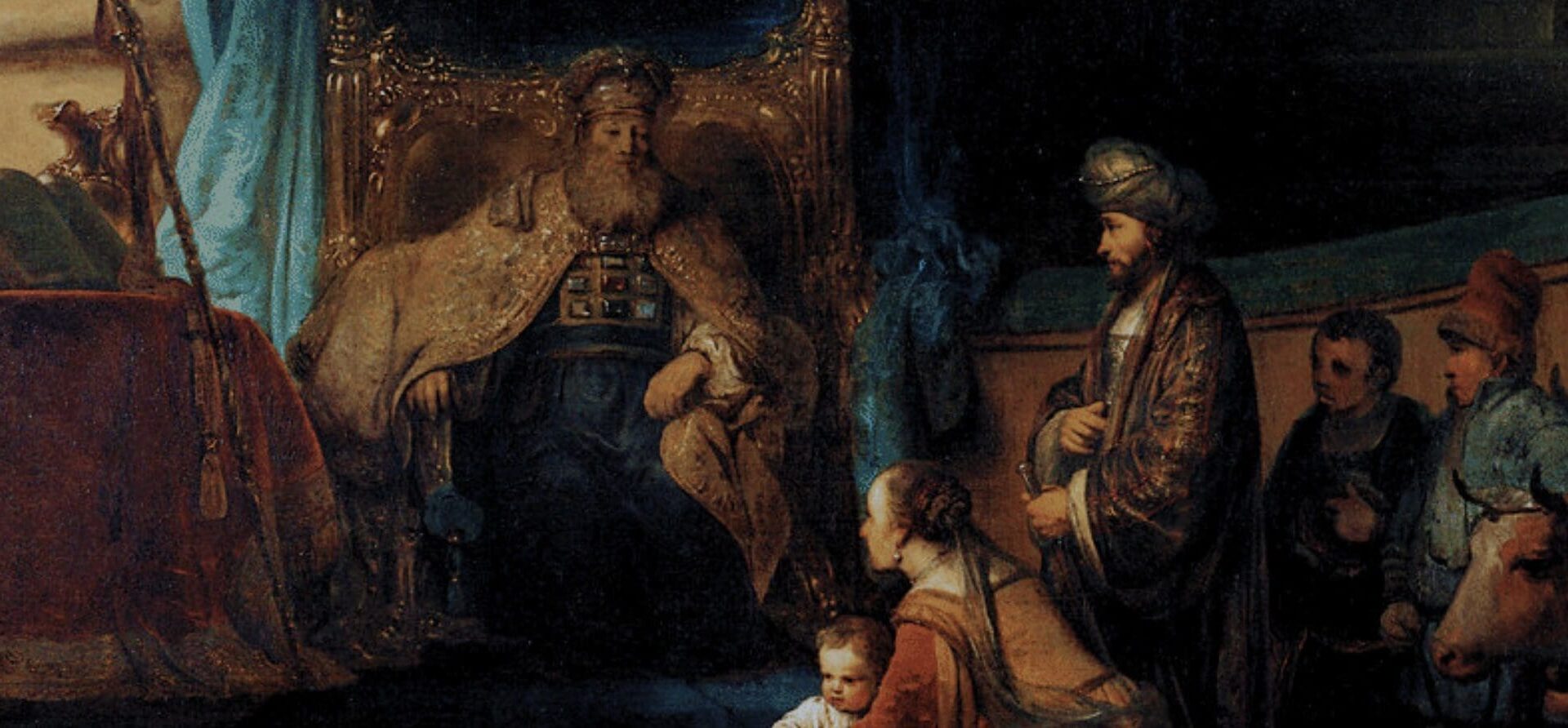
Let’s talk about the ever-interesting priestly garment of the Old Testament: The Ephod. And I give you my word that it IS interesting! The Ephod was a part of the high priest’s outfit, it was the outermost layer and quite intricate. The fabric itself was made of a blend of dyed wool, linen, and gold. It was bejewelled with carved stones set in gold, with various gold fastenings. Exodus 28 describes it for us:
“Make the ephod of gold, and of blue, purple and scarlet yarn, and of finely twisted linen—the work of skilled hands.7It is to have two shoulder pieces attached to two of its corners, so it can be fastened.8Its skillfully woven waist band is to be like it—of one piece with the ephod and made with gold, and with blue, purple and scarlet yarn, and with finely twisted linen.”
These details and more that are in the full description of Exodus 28 paint an overall image for us of the High Priest as an extension of the Tabernacle/Temple/Holy Space. By putting on his high priestly garments he becomes part of the tabernacle, an intermediary between his people and God. He represents the presence and working of God to the people and represents the people to God. Later in Exodus 28 we learn that the Ephod has two signet seal type stones mounted on it, one on each shoulder that have all 12 tribes names on engraved on them and then a breast piece which is essentially a pocket, that has 12 precious stones mounted on it again with the names of the 12 tribes. I think we’re supposed to see that the tribes of Israel are always symbolically before God, or in the presence of God.
Another main function of the Ephod was to hold a decision making device:
30”Also put the Urim and the Thummim in the breast piece, so they may be over Aaron’s heart whenever he enters the presence of the LORD. Thus Aaron will always bear the means of making decisions for the Israelites over his heart before the LORD.”
The idea here is a simplified way of getting direction from God via His special representative, the High Priest.
“The High Priest’s outfit was supposed to be altogether different. His role was special, it was sacred.”
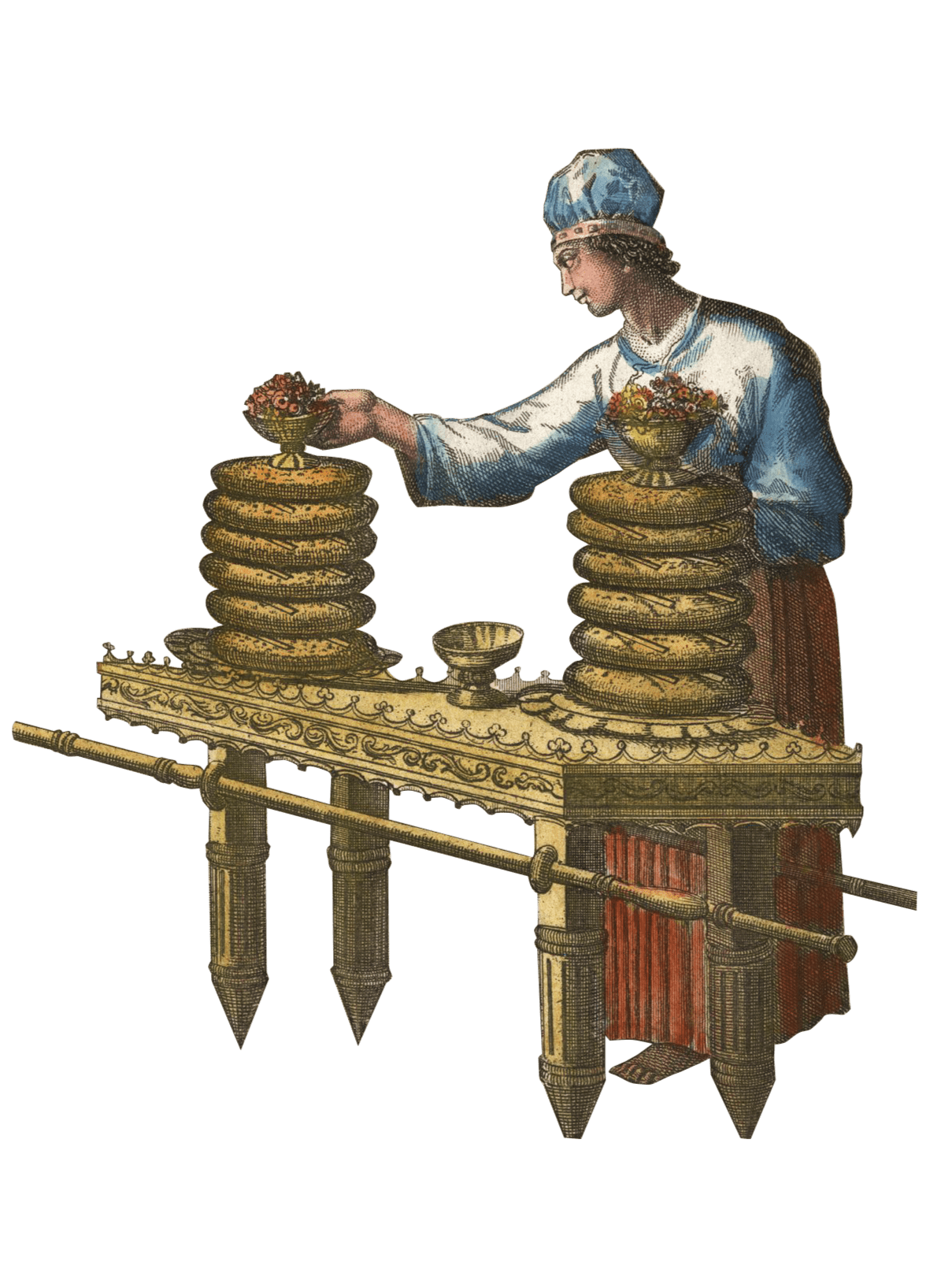
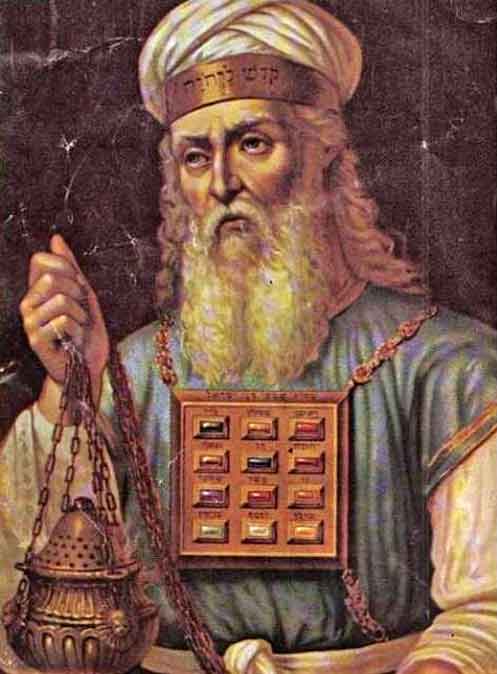
Can you imagine what it would be like to see the High Priest dressed in his Ephod? It had strands of real gold woven into it as well as wool and linen: It must have been a heavy, stiff fabric, but shiny, reflective, bejewelled. It certainly would have tied the High Priest to the gilded Tabernacle around him. Now at this point in Israel’s history, it’s interesting to note that it seems only the High Priest has an ephod, we’re told in the same chapter of Exodus that Aaron’s sons wore tunics, sashes and caps of linen. Even that mixture of linen and wool in the High Priests’ garments was off limits to regular Israelites. In Leviticus 19:19 the Bible says: “…Do not wear clothing woven of two kinds of material.” And Deuteronomy 22:11 clarifies for us: “Do not wear clothes of wool and linen woven together.” The High Priest’s outfit was supposed to be altogether different. His role was special, it was sacred. Now by the time of the Judges of Israel, a few generations later, we see that it was common for the regular Levitical priests serving in the Tabernacle to also be wearing an ephod, with one huge exception: Their ephods were just made of linen. They also would not have all of the extra clothing and jewelry that the high priest wore. So, either this was an addition to the received law at Sinai, or it had always been a thing, but was a detail not mentioned explicitly in the text. Whatever the case, look at 1 Samuel 2:18:18 “But Samuel was ministering before the LORD—a boy wearing a linen ephod.” There’s also this disturbing scene that speaks to on-duty priests wearing linen ephods, 1Sam. 22:18:18 “The king then ordered Doeg, ‘You turn and strike down the priests.’ So Doeg the Edomite turned and struck them down. That day he killed eighty-five men who wore the linen ephod.” King David also once wore a linen ephod at a religious celebration, and he was NOT a Levite or a priest. This is a really interesting case because normally the king would be wearing his Kingly robes, but instead David donned a linen ephod, 2 Samuel 6:14:14 “Wearing a linen ephod, David was dancing before the LORD with all his might”
So the Bible establishes a few things:
1. That the High Priest’s ephod was unique. It was woven with gold, wool and linen and represented a special status and carried the Urim and Thummim.
2. Other working priests wore ephods but made only of linen.
3. In special circumstances other (important?) people, like King David, could wear a linen ephod.
These reasons are why we should find it absolutely shocking that in Judges 8 the Bible tells us this about the judge Gideon:
“Gideon made the gold into an ephod, which he placed in Ophrah, his town.” All Israel prostituted themselves by worshiping it there, and it became a snare to Gideon and his family. Later on in the same chapter it says: “No sooner had Gideon died than the Israelites again prostituted themselves to the Baals. They set up Baal-Berit has their god and did not remember the LORD their God…” Gideon made what in-practice became an idol, but it was not an idol to worship the baals, or the gods of the land. And this makes sense to me because Gideon’s Golden Ephod must have been a replica of the High Priest’s ephod. His goal was not to reengage in baal worship, otherwise he would have made a baal idol and high place like the one of his father that he had already torn down. If we’re generous: Perhaps Gideon’s goal was to show the people that now they were to serve God and not the Baals–he had torn down the baal idols and replaced it with a symbol of God worship. But if this was the case, Gideon miss stepped–in the covenant that the people already had with God, they were to only worship at the Tabernacle. Though, I can see the loop hole that Gideon may have appealed to–Gideon WAS following the first and second commandments, he wasn’t making an image of God or of a created thing, he was making a copy of the high priests’ garment, not the high priest himself. He may have just wanted a symbol to ally himself with the God of Abraham, Isaac, and Jacob. A darker option for Gideon’s motivation could be that he wanted access to divine answers–did his Golden Ephod include a Urim and Thummim? We’re not told that he hired a priest or attendants for the Ephod, but the Scripture does say that the people worshipped it, so I think it is likely that he did have some sort of religious system established for his high priestly ephod. Or at the very least, if he didn’t establish a system of offerings to the Ephod, the people of his town did. Did the people want to come see the ephod, and so an industry naturally arose around it? Or did Gideon intend for people to come see it and give glory to God and to him as God’s tool of deliverance? We can’t say. But it wasn’t right regardless.

Corie Bobechko is a daily co-host, speaker, and writer of Bible Discovery. She also hosts a YouTube channel that shows how history and archaeology prove the Bible. Her heart for seekers and skeptics has led her to seek truth and share it with others. Corie also has a Bachelor of Theology from Canada Christian College.