


Cart 0
I want to talk about an archaeological site that is being used to discredit the Bible’s history in a way that I think is a bit bizarre. The site is called Tel Mozah, and I’ve done a previous segment reviewing the site, so go look for that if you haven’t seen it, but today I’m going to be addressing claims made by the site’s excavators. For the excavators, the Mozah temple is a fly in the ointment of Biblical history. If the Bible is true, it shouldn’t exist. Take this line from their popular article: “But what is a temple doing at Tel Moza during this period, when the Bible says the only temple in Judah was in Jerusalem?!”1 This question seems extremely disingenuous, because if you actually read the Bible it tells us in multiple places that ancient Judah was filled with cult places besides the Jerusalem Temple. Beginning with the builder of the Temple in Jerusalem himself, King Solomon. 1 Kings 11:7-8 says, “On a hill east of Jerusalem, Solomon built a high place for Chemosh the detestable god of Moab, and for Molek the detestable god of the Ammonites. He did the same for all his foreign wives, who burned incense and offered sacrifices to their gods.” (NIV), for reference Solomon’s harem had 700 royal wives. 1 Kings 14 and 15 tell us that Solomon’s son King Rehoboam, built even more worship places in Judah, and his son King Abijah maintained them – so these worship places were royally sanctioned by the house of David in Jerusalem and it’s the reason the Biblical prophets condemned Judah. It does not go against the Bible to find another temple or cultic structure in Judah, it actually supports the biblical narrative! So at best here, the excavators are setting up a false dilemma, but in case you read your Bible, they pivot, they say, “Despite the biblical narratives describing Hezekiah’s and Josiah’s reforms, there were sanctioned temples in Judah in addition to the official temple in Jerusalem.”2 Now 2 Kings 18 and 22 do record that Kings Hezekiah and Josiah successfully centralized worship at the Jerusalem temple. However, the Bible also tells us that these reforms were short-lived, immediately undone by following kings. So, other than these 2 times of reform, we should expect to see cultic places in Judah.
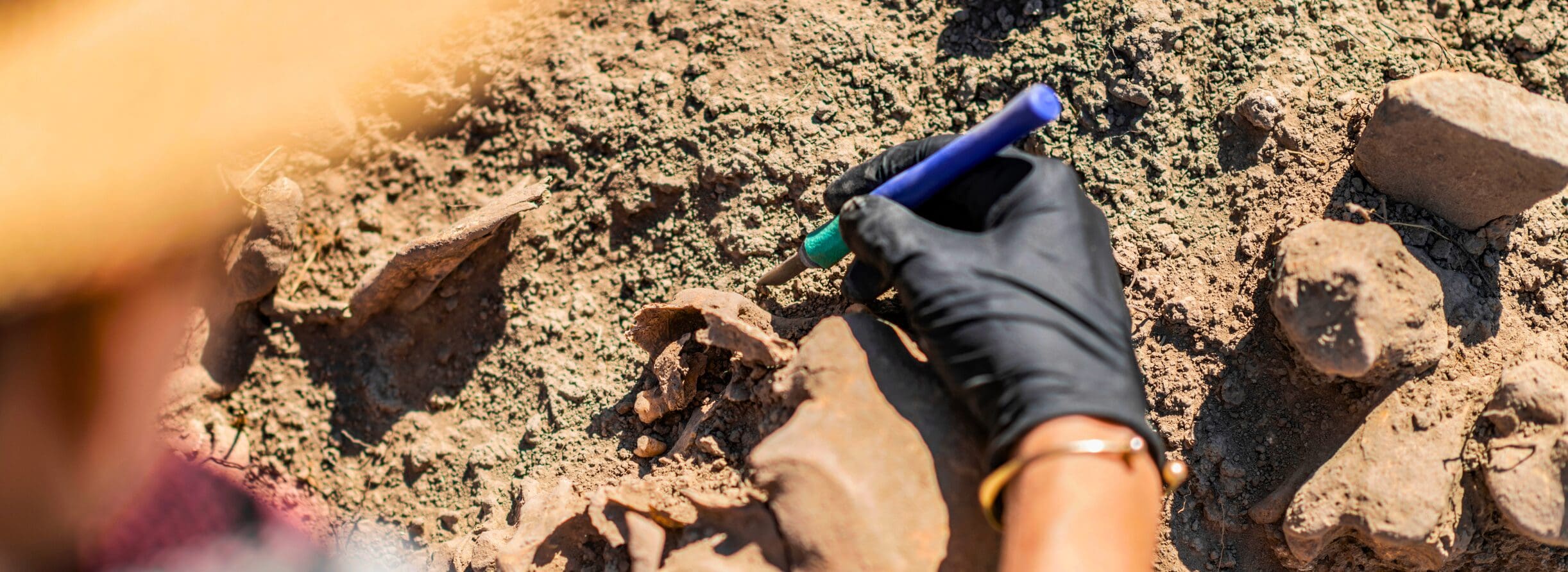
“Amazingly, in their articles the excavations discuss what seems to look an awful lot like something that could have been part of a religious reform, a decommissioning of the Mozah temple.”
Amazingly, in their articles the excavations discuss what seems to look an awful lot like something that could have been part of a religious reform, a decommissioning of the Mozah temple. They say, “At the end of the first phase of the temple…The artifacts were collected from throughout the temple complex, intentionally broken, deposited within the delimited area and covered with a thick layer of earth and pieces of plaster. This was followed by a fill deposited throughout the courtyard, covering the various installations, and sealed by a packed-earth floor…”3 So the artefacts were broken and the entire temple was buried. A few sentences later the archaeologists write, “…it is unclear whether the structure continued to function as a temple…”4 In their footnotes they clarify that they hope their upcoming excavations will reveal what the building then functioned as. But despite them admitting this their popular article still claims that the intentional breaking and burial, “…does not signify a break in religious traditions but rather a religious ritual during which cultic paraphernalia were decommissioned to make room for new items.”5 So in their article for non-experts they claim that the site debunks biblical history, because it operated as a temple with no breaks throughout the whole biblical period, so this debunks Hezekiah and Josiah’s reforms. While in their scholarly article they admit that they have no evidence for this interpretation and are hoping to find some. Look, the world of Biblical archaeology is tough. Emotions are elevated because it deals with religious beliefs and archaeologists need funding – at least that’s my take. But when it comes to the Bible, let’s make sure we know what it is actually claiming. That way we’ll know how a site truly informs the text. We need to read, and read carefully.
1Kisilevitz, Shua, and Oded Lipschits. “Another Temple in Judah!” Biblical Archaeology Review 46.1 (2020): 40–49. 2Kisilevitz, Shua, and Oded Lipschits. “Another Temple in Judah!” Biblical Archaeology Review 46.1 (2020): 40–49.

Corie Bobechko is a daily co-host, speaker, and writer of Bible Discovery. She also hosts a YouTube channel that shows how history and archaeology prove the Bible. Her heart for seekers and skeptics has led her to seek truth and share it with others. Corie also has a Bachelor of Theology from Canada Christian College.