Cart 0
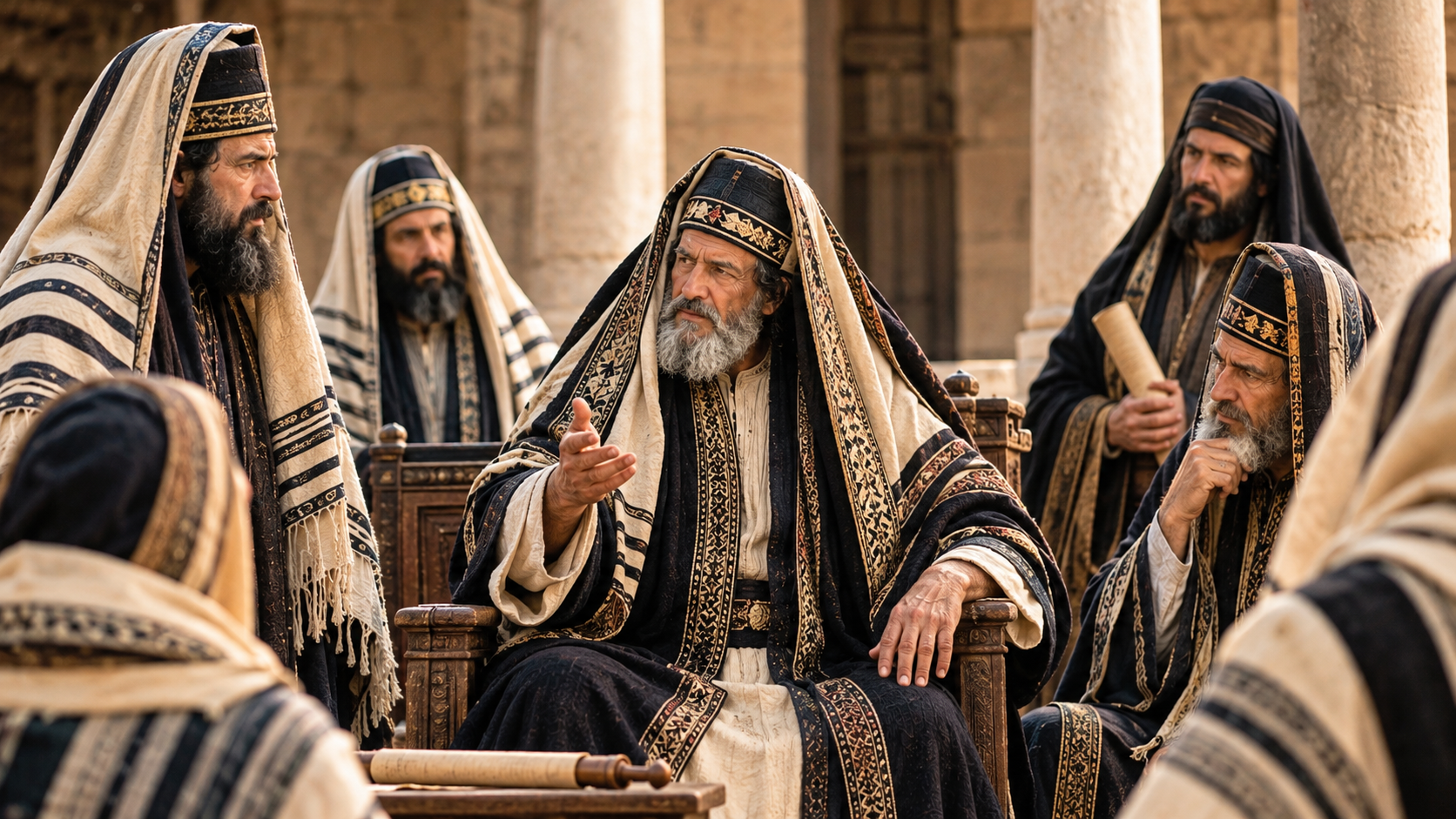
The Sanhedrin appears in the New Testament of the Bible as a ruling body of men presiding over the religious affairs of Judaism [Matthew 26, Mark 14, Luke 22, Acts 4]. Information about the Sanhedrin directly from the 1st Century AD, which is the time of the New Testament, is limited; So resources must be drawn from the later written accounts of Judaism [Mishnah, AD 200 approx.].
This is why scholars are still unsure whether during the days of Jesus, there was a permanent Great Sanhedrin centered in Jerusalem, or if there were many smaller territorial Sanhedrins, and one larger one that could be called upon when needed in Jerusalem.
What is known is that the ideal number of members seems to have been 71, presided over by the High Priest. The members came from any sect of belief within Judaism, mainly consisting of Pharisees and Sadducees.
Even though Pharisees appear to have outnumbered Sadducees in popularity and overall numbers, it also appears that the Sadducees still managed to outnumber the Pharisees in the Sanhedrin, likely due to their place and temperament within the Temple.
“This meant that the Sadducees rejected the existence of angels and demons, a bodily resurrection and the immortality of the soul, and they emphasized human free will over the predestination of God.”
Sadducees generally came from the upper classes of society, and many from priestly families. Historically, they supported the Hasmonean dynasty of kings that arose during the intertestimental time period, and had made their peace with Hellenization. In other words, they were okay with mixing Judaism with Greek and Roman culture.
They rejected the oral law of the Pharisees, believing that while the entire Old Testament was inspired by God, only the first 5 books of the Bible, the books of Moses, could be used to build doctrine or teaching upon. This meant that the Sadducees rejected the existence of angels and demons, a bodily resurrection and the immortality of the soul, and they emphasized human free will over the predestination of God.
The Sadducees however were extremely tied to the Temple service in Jerusalem, largely being from priestly families, and were responsible for its upkeep and taxes. Apparently by Jesus’ day that had become very wealthy through it as well. While this did them well for a time, it also meant that their order did not survive the Roman destruction of the Temple in AD70.

Corie Bobechko is a daily co-host, speaker, and writer of Bible Discovery. She also hosts a YouTube channel that shows how history and archaeology prove the Bible. Her heart for seekers and skeptics has led her to seek truth and share it with others. Corie also has a Bachelor of Theology from Canada Christian College.