Cart 0
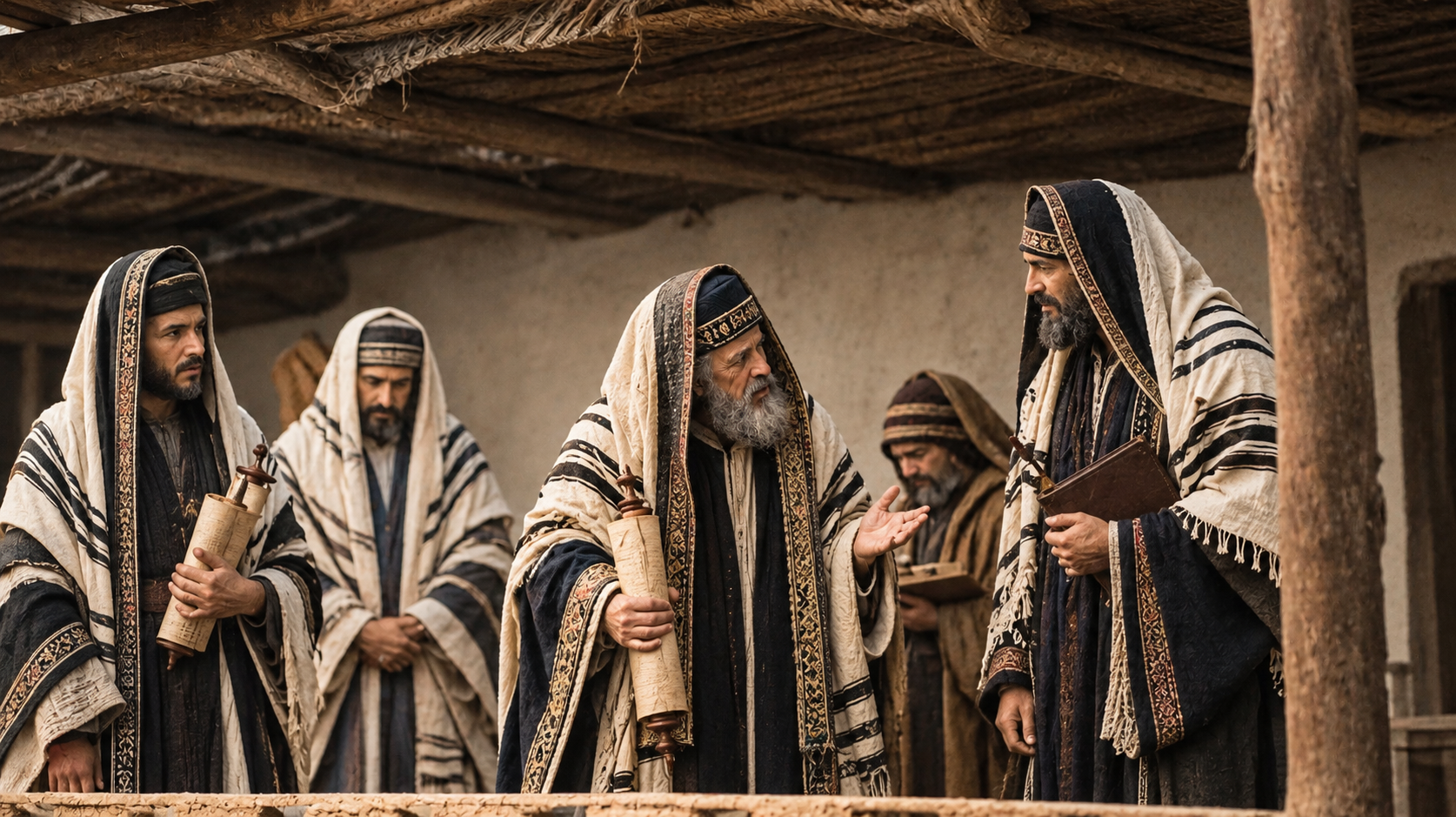
In the New Testament Gospels it is common to read references to the Scribes and the Pharisees, often in the context of Jesus answering or facing their challenges.
These two groups held a prominent place within first century Judaism.
It’s commonly acknowledged that the term “scribe” generally refers to people who are tasked with writing down words and histories: within Judaism this meant specifically the copying of Hebrew Scriptures [Old Testament of the Bible].
The scribes’ resulting familiarity with the Scriptures led many to become well respected as experts and teachers in the Law of Moses. In First Century AD Judaism, Scribes could come from any of the religious sects or denominations, but it is frequently assumed that most came from the sect of the Pharisees.
“Their knowledge paired with their normal stations in life and their concern for the everyday man made Pharisees very popular influencers with the masses…”
The Pharisees became a recognizable group during the time between the events of the Old and New Testaments [time of John Hyrcanus, 134-104 BC]. The term may mean “separatist” as they were opposed to the king-priest designation claimed by the Hasmonean dynasty, their rival religious faction in this respect became the Sadducees who had embraced the king-priest concept.
Pharisees were generally not from the nobility, or wealthier classes of people. Their top priority was applying the Scriptures to the everyday life of the everyday Jew. This took the shape of teachings, or rules, about the Laws of Moses. How to follow the Mosaic law in contemporary life.
Their knowledge paired with their normal stations in life and their concern for the everyday man made Pharisees very popular influencers with the masses, alternatively treated with suspicion and fear by some of the much smaller upper class.
Pharisees seem to have been anti-Roman in that they wanted political and religious freedom without mixing pagan culture into Judaism, but they were also usually non-violent, preaching instead that as the masses turned to God, He would provide deliverance.
Their distinguishing religious beliefs included their insistence on the immortality of the soul, the existence of angels and demons, a combination of freewill choice and God’s predestination, future rewards and punishments in the afterlife, and a physical bodily resurrection.

Corie Bobechko is a daily co-host, speaker, and writer of Bible Discovery. She also hosts a YouTube channel that shows how history and archaeology prove the Bible. Her heart for seekers and skeptics has led her to seek truth and share it with others. Corie also has a Bachelor of Theology from Canada Christian College.