


Cart 0
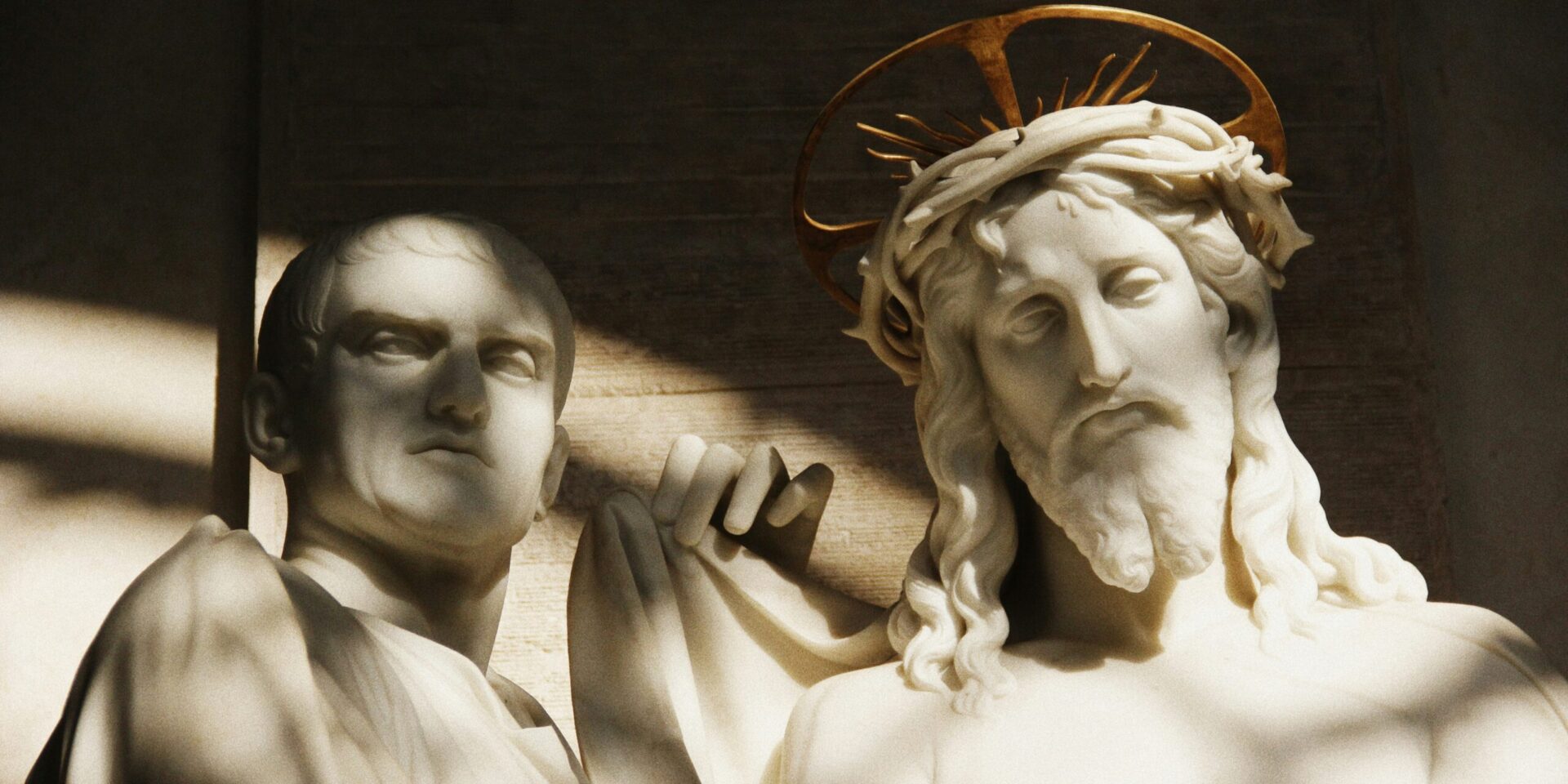
The man Pontius Pilate comes down to us through history in a few different ways: the New Testament of the Bible (Matthew 27, Mark 15, Luke 3,13,22-23, John 18, Acts 3,4,13, 1 Timothy 6), historians Josephus and Philo of Alexandria, and an inscription discovered at Pilate’s Judean home, Caesarea.
These histories tell us a few common facts about Pilate: that he was the governor or prefect of Judea (25-37AD), which was a Roman province that encapsulated the ancient land of Israel, and that he condemned Jesus to death by crucifixion.
The Bible doesn’t have much to add on the personality or character of Pontius Pilate. Some Christians of history have attempted to exonerate Pilate for this cruelty by noting his seeming indifference, the washing of his hands, and his offer to release a criminal, but these are not glowing reviews by the Bible’s authors, in the end Pilate willingly authorized the execution of a man he thought was innocent of a capital crime.
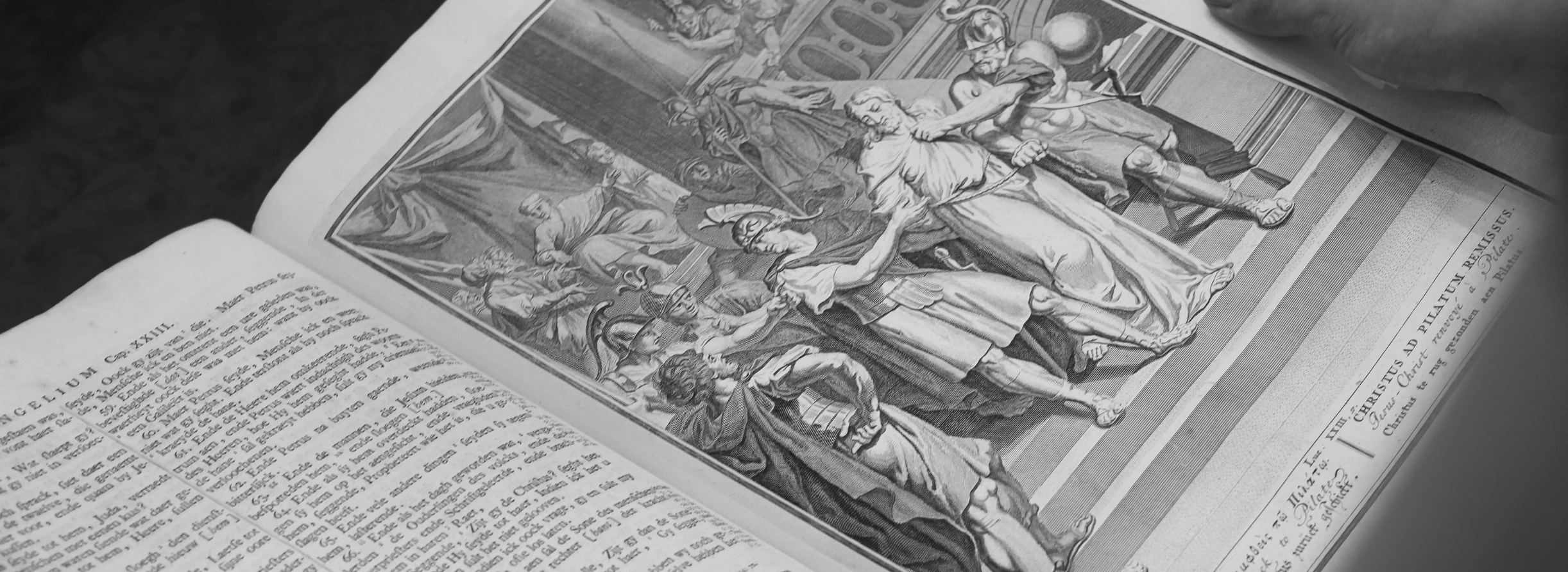
“…there were only two major conflicts that happened during his long rule as governor.”
Josephus and Philo add a bit more to our knowledge, Philo claims that Pilate was ‘inflexible, stubborn and cruel’ in disposition, and together the historians record the two major conflicts Pilate is said to have had with the Jews under his governorship.
First, Pilate attempted to bring golden shields with idolatrous images on them into Herod’s palace in Jerusalem. To the Jews it was altogether inappropriate to bring idolatrous images into the city that housed God’s Temple.
So many faithful travelled to Pilate’s palace in Caesarea and when Pilate threatened them, they exposed their necks preferring death over the defilement of Jerusalem. Pilate in this case backed down, he spared their lives and removed the golden standards from Jerusalem.
The other incident recorded is how Pilate used money from the Temple treasury to complete an aqueduct in Jerusalem. During a religious festival the people caught wind and began to protest. Pilate sent his guards out in plain clothes among the people with instructions to use non-deadly force, the butt ends of their swords to tame the crowd if necessary, but the situation became a bloodbath with the soldiers killing many. (This may be the incident mentioned in Luke 13:1)
Modern historians have theorized that this event may point to Pilate’s working relationship with Caiaphas the high priest, noting how he alone controlled the temple’s money, and that Josephus does not say anything about him being coerced. It is worth noting that while Philo and Josephus seems to speak negatively of Pilate’s character, there were only two major conflicts that happened during his long rule as governor.

Corie Bobechko is a daily co-host, speaker, and writer of Bible Discovery. She also hosts a YouTube channel that shows how history and archaeology prove the Bible. Her heart for seekers and skeptics has led her to seek truth and share it with others. Corie also has a Bachelor of Theology from Canada Christian College.