


Cart 0
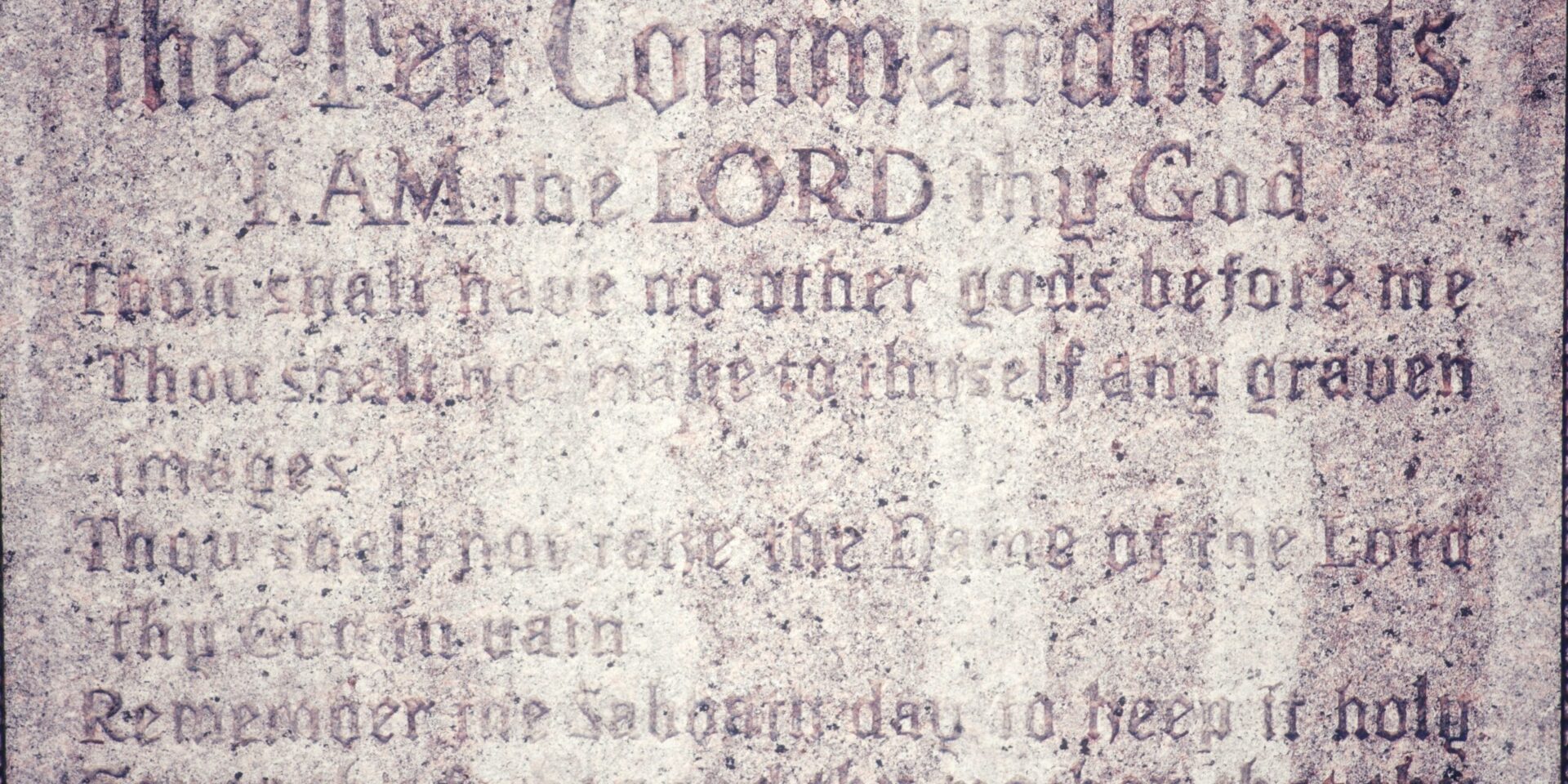
Etched into stone tablets on Mount Sinai and placed into the Ark of the Covenant, the Ten Commandments hold a special distinction among the 600+ commands given in the Law of Moses. Even in several societies today they are still regarded as the standard of living. Given their importance then, it is no surprise that they point directly to Christ Jesus in several ways.
First, and most obvious, they reveal our need for Christ. Indeed, the Ten Commandments highlight God’s perfect standard and exposes our failure to live up to that standard. It shows our desperate need for redemption since sinners cannot dwell in the presence of a holy God. And as the New Testament makes clear, the law cannot redeem or save us, but it does point to the One who can—namely Jesus Christ who followed the whole law perfectly. Thus, when we “put on the Lord Jesus Christ” (Rom 13:14) by turning and trusting in Him and renouncing our sin, we become righteous in God’s sight.
A second way in which the Ten Commandments point to Jesus is by its very title. While commonly referred to as “The Ten Commandments” they are also known as the Decalogue meaning the “ten words” (from the Greek deka = ten and logos = word) and in Hebrew they are apparently called the “Ten Living Words.” Notice also what Luke says of Moses in Acts 7:38: “He was in the assembly in the wilderness, with the angel who spoke to him on Mount Sinai, and with our ancestors; and he received living words to pass on to us.” What is so significant about this is that these ten “living words” point forward to the person the Apostle John refers to as the “Living Word” Jesus Christ. (John 1)
The late Hebrew scholar Michael Esses showed yet another way how the Ten Commandments point to Christ. “The first five commandments,” he says, “show us our proper relationship with God, a vertical relationship. They show us how to get along with God our Father, God the Son, and God the Holy Spirit. The last five commandments deal with horizontal relationships, how men are to get along with one another. Putting the vertical and the horizontal together, we come up with a cross….” This again points to Christ who died on a cross and who declared in Luke 9:23 that “If anyone desires to come after Me, let him deny himself, and take up his cross daily, and follow Me.” The five vertical and five horizontal commands form the cross “on which we are to die to self in order that His will might win out.” Many are willing to die for Christ (and many do), but how many are willing to live for Him daily?
So Jesus Christ is present and even pictured within the Ten Commandments themselves. Truly, Jesus did not come to abolish the Law or the Prophets but rather to fulfill them! (Matthew 5:17)

Ryan Hembree is a daily co-host, speaker, and writer of Bible Discovery. He also hosts a YouTube channel that shows the unity of the Bible and how science and Scripture fit together. Ryan also has an honorary Masters of Ministry in Creation Science from Phoenix University of Theology.
[1] Michael Esses, Jesus in Exodus, P.110.
[2] Ibid., P.111.
[3] Ibid.