


Cart 0
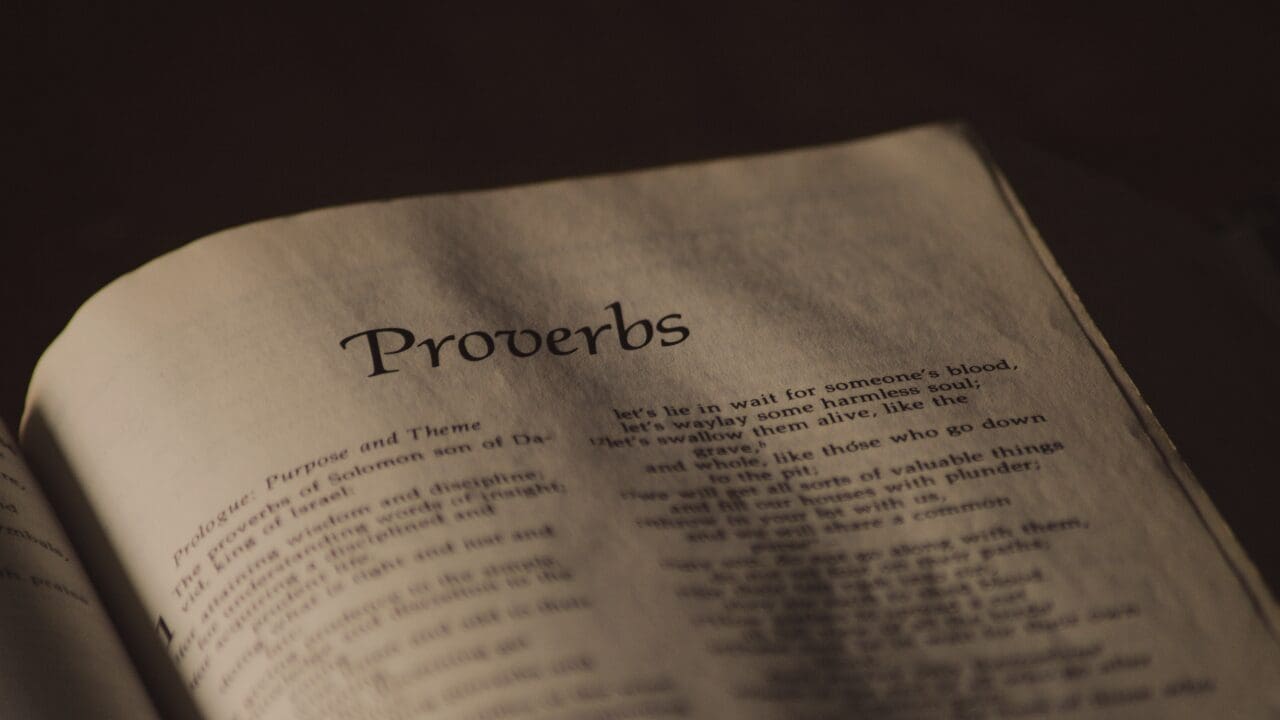
Aptly named, the Biblical book of Proverbs is made up of sayings that contain general, practical truths, and therefore can be applied by the reader in day-to-day circumstances.
While the concept of a collection of wise sayings is not unique to the Bible or Israelite culture, the book of Proverbs does have a unique contribution to wisdom literature as a whole;
it views all wisdom as stemming from a proper respect for God. [Proverbs 1:7, “The fear of the Lord is the beginning of knowledge; fools despise wisdom and discipline.”] And it is meant to be a call to action: rallying people to pay attention to wisdom and to become wise not simply through the trial and error style learning that life experience gives you, but by contemplating wisdom that is already known, tested, and now collected in the book of Proverbs.
Within the book itself, King Solomon, the son of David and 3rd king of Israel, is named as author [Proverbs 1:1, 10:1]. This corresponds with what 1 Kings tells us of Solomon’s 40-year reign. We’re told that he became known for his wisdom, and that among other academic accomplishments, he wrote thousands of proverbs and songs [1 Kings 3, 4:32-33].
Lemuel was a nickname for King Solomon that his mother gave him; the name means “devoted to God”

Once the reader comes to Proverbs chapter 25 however, the book records that this section [chapters 25-29] was written by King Solomon [970-931BC], but was collected into the book long after his death, by the men of King Hezekiah’s royal court [716-687BC]. Jewish tradition also credits Hezekiah with arranging Ecclesiastes and Song of Solomon, the other major Biblical writings of Solomon.
Proverbs chapter 30 records that it was written by the otherwise unknown, Agur son of Jakeh. An interesting dilemma is introduced by Proverbs 31 that claims to have been written by a King Lemuel [Proverbs 31:1], and is an acrostic poem about a wife of noble character.
Since no known king of Israel or Judah was named Lemuel, and his nation is not mentioned in the text, his identity has been the matter of much speculation. Some suggestions have been a foreign king who converted to worship of the Israelite God, or perhaps
Lemuel was a nickname for King Solomon that his mother gave him; the name means “devoted to God” and the poem was composed based off of teaching that the king’s mother had passed on to him.

Corie Bobechko is a daily co-host, speaker, and writer of Bible Discovery. She also hosts a YouTube channel that shows how history and archaeology prove the Bible. Her heart for seekers and skeptics has led her to seek truth and share it with others. Corie also has a Bachelor of Theology from Canada Christian College.